
You're Not Lost. You're Early.
Almost every day I feel lost. Not the poetic kind. What if the map never comes, and building without one is just what building is?

Honest truth: at some point almost every day, I feel lost.
Not the poetic kind. Not the "I'm on a journey" kind. The kind where you're staring at the thing you're building and genuinely ask whether any of it matters.
The tools I learned six months ago work differently now. A workflow I built last week is already obsolete. Somewhere out there is a person using the same tools and getting more out of them than I am.
It isn't imposter syndrome. It's just Tuesday.
The Comfort Version, and Why It Doesn't Hold
There's an entire genre of content built to make you feel better about this. You're not lost, you're finding yourself. Trust the process. Clarity comes after action.
I think trained optimism is a real skill. But when the ground is actually moving under a thing you're building, affirmations start to feel like set dressing.
So here's the harder question.
Not "the map hasn't arrived yet." Not "clarity follows action." What if there is no map, and this, the building without a roadmap, the recalibrating every week, the never quite feeling settled, isn't a phase at all.
What if this is just what building looks like, permanently.
I sat with that for a while and it's genuinely unsettling, because "you're not lost" quietly assumes a destination where the lostness stops. If there isn't one, the sentence does nothing.
Maybe the people who build real things aren't the ones who found clarity. Maybe they're the ones who learned to work without it.
What the Research Says About the Feeling

Judson Brewer studies what happens in your brain when uncertainty becomes a loop. His work on anxiety and habit shows the brain treats ambiguity as a threat and tries to think its way out. Thinking without acting just feeds the loop.
Rumination disguised as productivity. I do this constantly. Sit with a question, turn it over, feel like I'm making progress because I'm considering it carefully, and nothing moves.
Ethan Kross calls the same thing chatter: the inner voice running on a track, going nowhere. His finding is that people who handle uncertainty well aren't the ones who resolve it. They're the ones who act inside it without needing it resolved first.
Amishi Jha's work adds the useful part. Attention is trainable. Staying focused while everything shifts isn't a temperament you either have or don't. It's reps.
Which lands somewhere less flattering than either story we tell about this.
The feeling of being lost isn't a sign something is wrong. But it also isn't a secret signal that you're early and brilliant. It's just how a nervous system behaves when the inputs keep changing.
What I Actually Do About It
Not prescribing this. Just saying what I do.
I use the tools instead of reading about them. Build something, break it, work out why it broke. Reid Hoffman calls this permanent beta, and the part that stuck with me is that you're never the finished version. You're always the draft.
I track where my predictions miss. Not formally, just noticing. I thought this would take a week and it took three. I thought this feature mattered and nobody touched it.
And I try to separate building from worrying about building. Tim Ferriss has a fear-setting exercise where instead of defining goals you define fears: what actually happens if this doesn't work? The answer is almost always smaller than the ambient dread suggested.
But most days there's no technique involved. I show up and do the next thing. No system, no framework, just accumulation, and trusting it means something on the days it doesn't feel like it does.
The Part I Can't Resolve
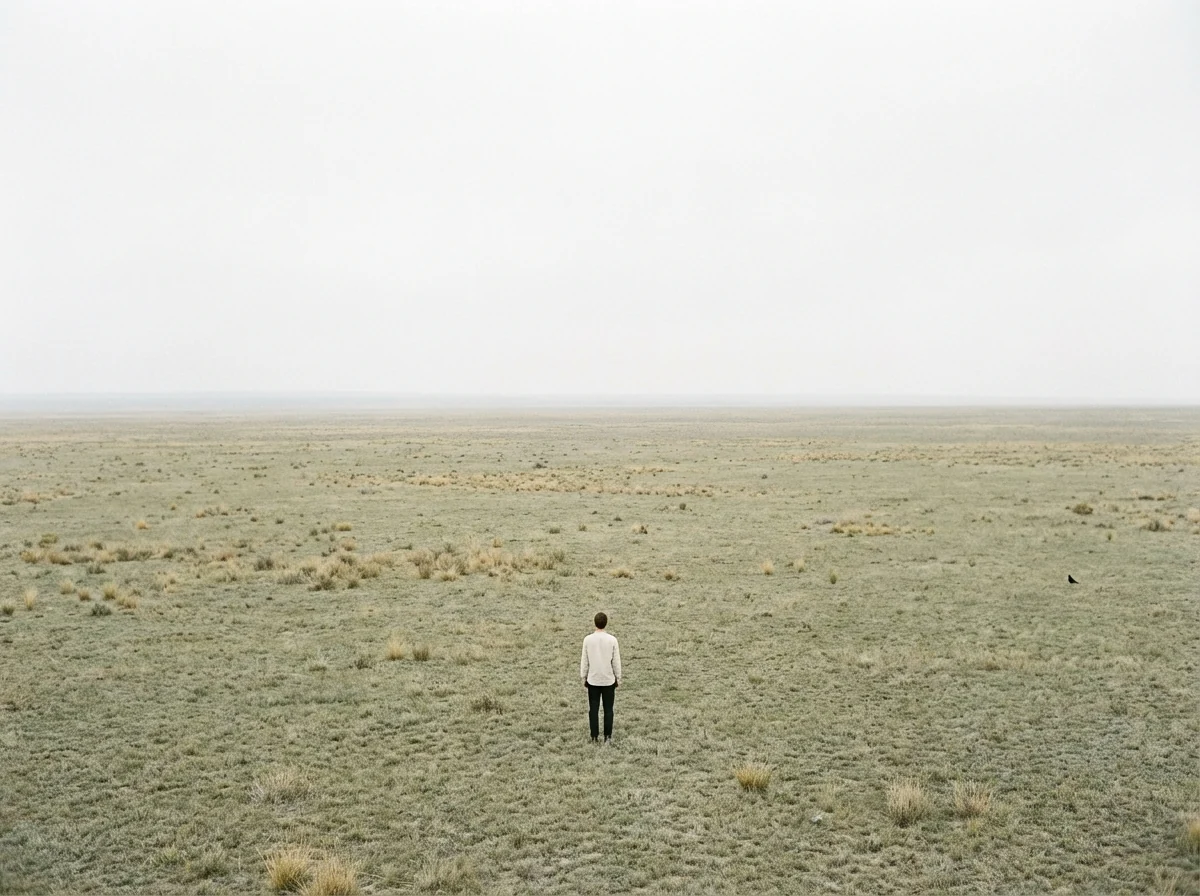
I hold two things at once and neither one wins.
I feel lost, regularly. The tools move too fast, the ground shifts under everything, and I'm not sure what I'm building today will be what matters tomorrow.
And also: I might be building the right things for a world that doesn't exist yet.
Kevin Kelly makes the point that the biggest opportunities carry the most question marks. The things that feel uncertain aren't uncertain because they're wrong. They're uncertain because they're new, and new things don't come with confirmation.
Brené Brown spent twelve years studying what happens when people act without certainty, and her finding is that vulnerability isn't the weak part of the process. It's where new things come from. Every creative act starts in not-knowing. That's the birthplace, not the obstacle.
So maybe the question was never "am I lost or am I early."
Maybe it's whether you can keep building without knowing which one you are.
Because that's the actual skill. Not navigating with a map. Navigating without one, and continuing anyway.
> More from the Index
All posts →


> Get posts like this
Keep the thread going.
New pieces land here first. No schedule, no noise, just the ideas worth the room in your inbox.
- Essays on attention, craft, and building
- What I got wrong, with the receipts
- The occasional teardown of something I built
Unsubscribe anytime · No spam
.gif)
> ReturnSend
Subscribe Now.
Wake up curious. The work, the art, and the ideas underneath. Occasional, personal, and only when there's something worth sending.