
Shots on Goal: Most of Your Work Never Tests the Net
You can have a full, exhausting, genuinely productive week and put up a zero. The only teams that definitely don't score are the ones that stop shooting.
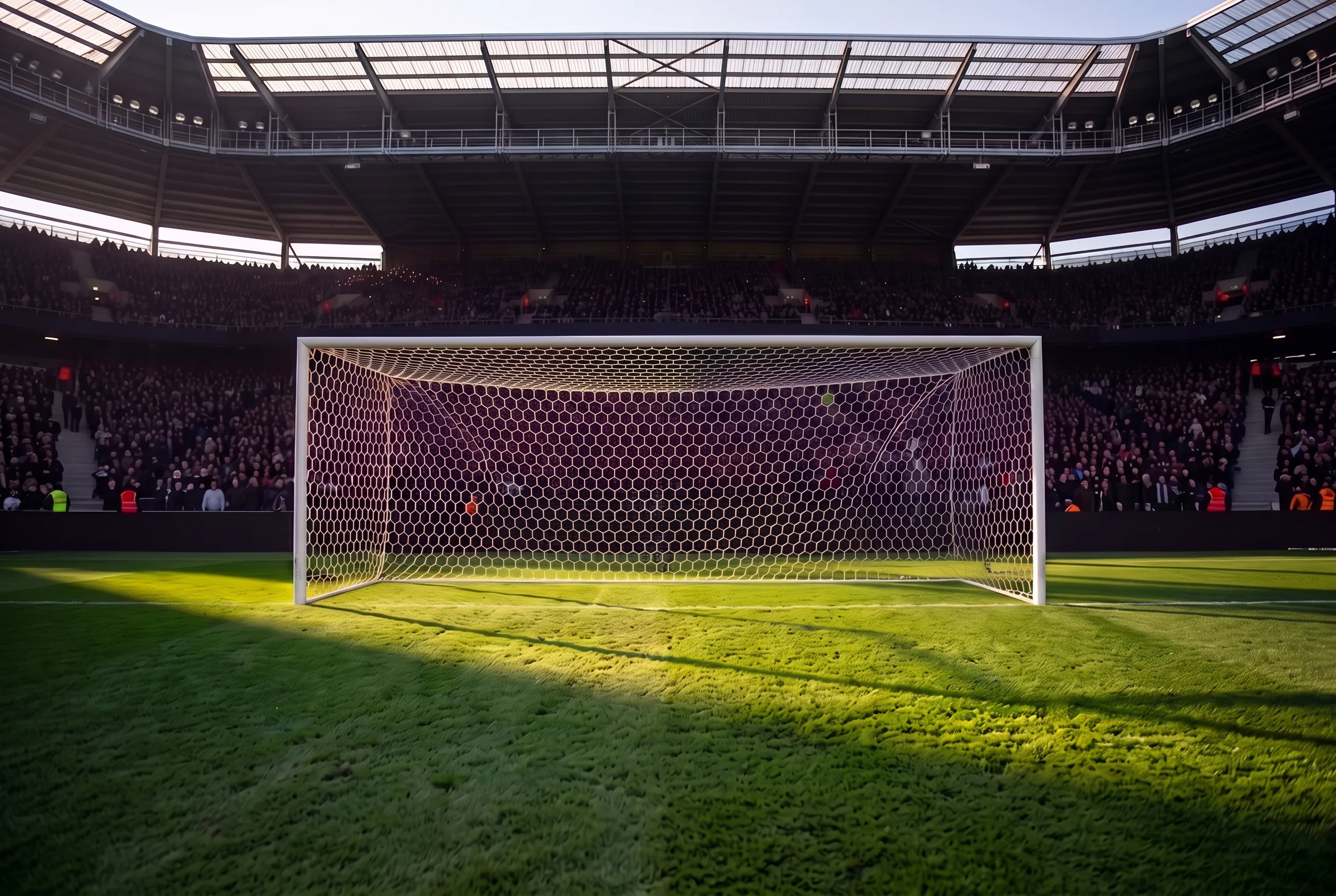
I watched the World Cup final. Argentina and Spain, out at the Meadowlands.
Argentina had two shots the entire match. Not two on target. Two attempts, total. Zero of them tested the keeper.
Spain took 20, put 12 on target, and it still took them until the 106th minute to score.
I kept thinking about those numbers after the game. Zero and twelve, and a 1-0 scoreline that tells you almost nothing about either one.
A Shot and a Shot on Goal Are Different Things
In soccer there's a shot, and there's a shot on target. A shot is any attempt. A shot on target is one that goes in if the keeper doesn't stop it. It's the subset that actually tests the net.
The distinction sounds silly until you count both.
On the final's stat sheet, total shots read 20 to 2. That's lopsided but survivable. Shots on target read 12 to 0.
Same match, two numbers. The first says Spain had the better of it. The second says Argentina never played.
Only one of those numbers has a keeper in it.
Effort Was Not the Variable
This is the part that stayed with me, because it kills the explanation everybody reaches for first.
There were 124 duels in that match. Spain won 64. Argentina won 60.
Sit with that. Same number of contests, split almost exactly down the middle. Argentina made more tackles, more interceptions, and more clearances than Spain did. By every measure of effort, it was a pretty even match.
Shots on target: 12 to 0. Zero saves for Spain. Eleven for Argentina.
So the thing that separated them wasn't work rate. Both teams emptied the tank. Effort was matched all night and it decided nothing.
Where You Shoot From Matters as Much as Whether You Shoot
The metric that actually runs modern soccer isn't shots on target. It's xG, expected goals.
Opta introduced it in 2012. It assigns every shot a probability of becoming a goal based on distance, angle, pressure, and shot type, trained on close to a million historical shots. A tap-in from six yards is near 1.0. A hopeful strike from the corner of the box is 0.04.
So xG doesn't count attempts. It grades them.
The final finished at 2.29 xG for Spain and 0.22 for Argentina. Spain didn't just shoot more. They shot from places where shots go in.
Break Argentina's 0.22 apart and it gets worse. Open play, 0.03. Set pieces, 0.20.
So across 120 minutes of a World Cup final, the entirety of Argentina's threat came from dead balls. Corners and free kicks. Moments the referee handed them. In open play, the part of the game you actually author, they created three hundredths of a goal. Their only chances were the ones somebody else stopped the clock and gave them.
That gap has a general version. In the Premier League's own analysis of the 2024/25 season, 14.7% of shots taken inside the box went in. From outside the box, 4.2%.
Same effort. Same shot on the stat sheet. Three and a half times the result, entirely because of where the player was standing when they took it.
Momentum Is Real, and the Scoreboard Is the Last Place It Shows Up
Here's the part I can't stop turning over.
Spain generated 2.29 expected goals. That means a team performing exactly like that scores roughly twice, most nights. For 105 minutes, the board said 0-0.
And there's a second number underneath it. xGOT, expected goals on target, grades the shots that actually made the keeper work. Spain's twelve on-target attempts were worth 3.03 goals. Argentina's were worth 0.00, because there were none.
3.03 against 1. Argentina's keeper personally deleted about two goals from that scoreline across eleven saves. It was one of the great goalkeeping performances in a final and it bought 105 minutes.
Spain also created four big chances and missed three of them. So the scoreline wasn't just being held down by great goalkeeping. It was being held down by great goalkeeping and Spain's own wastefulness, two independent forms of luck stacked on top of each other.
Which is the whole situation in one line. Every honest measurement said Spain was winning. The one measurement everybody was actually watching said the match was even.
Then the 106th minute happened, both forms of luck ran out at once, and the score caught up to what had been true for an hour and a half.
Which cuts in a direction most people don't like. If you're the team creating chances and the board still says nothing, you are not doing the wrong thing. You are early. The gap between your xG and your goals is the most reliably temporary thing in the sport.
And if you're the team holding on at 0-0 with zero shots on target, you're not level. You're behind by a margin the scoreboard is politely concealing.
I've been both teams inside the same quarter, and I misread it both times.
Most of What I Call Work Never Tests the Net
I went back through two weeks of my own work with this question: how much of that was a shot on goal? Not activity. Not preparation. An actual attempt where the outcome could have been a client, a launch, a decision that moved something.
The answer was uncomfortable and I'm going to be specific about it, because the vague version lets me off.
I spent three days building an outreach system. Fields, tags, a sequence, a tracking view. Genuinely good infrastructure. In those same three days I contacted four people.
That's the honest version. The strategic version is "I was refining the outreach sequence."
But refining is just stalling with a system.
The system wasn't wrong to build. It'll outlive the four emails. The problem is that I counted the three days as work of the same kind as the four emails, and they are not the same kind of thing at all. One tested the net. The other was 763 accurate passes.
Possession Is the Most Convincing Thing You Can Do Instead
This is why the metaphor holds better than it should.
Possession feels like winning. You have the ball. You're in their half. The passes are connecting. Every neutral observer would say you're playing well, and you'd agree, and you'd be right.
Business has a very deep bench of possession activities. Refining the offer. Rebuilding the site. Reorganizing the CRM. Researching the market. Redesigning the deck. Every one of them is defensible. Most are necessary at some point.
They just don't test the net.
And the stat sheet has a crueler version of this that I keep coming back to. Argentina played 464 passes. Those 464 passes produced eight touches in Spain's box. Eight.
Break the passes down by direction and you can see where they went. Argentina played 273 passes in their own back zone and 198 forward. They passed backwards more than they passed forwards. Spain's split ran the other way, 365 back and 515 forward.
Both teams were busy. One team's busyness had a direction.
The only attacking category Argentina actually won all match was accurate long balls, 25 to Spain's 23. They also took more throw-ins. That's the shape of a team generating maximum activity in the categories that don't decide anything, which is a thing I recognize in my own weeks more than I'd like to.
A shot on goal has a defender in it. Somebody can reject you, ignore you, ghost you, or buy. If the activity can be completed entirely inside your own control, it wasn't a shot. It was preparation for one.
I like preparation. I'm good at it. That's exactly the problem.
Sometimes the Bad Shot Is the Right Shot
The clean version of this argument is that you should only take high-xG attempts. Get in the box. Stop firing from distance.
That's mostly right, and it's also how people talk themselves into shooting never.
Because early on you don't know where the box is. You don't have the data to know which attempts convert, and the only way to get it is to take a lot of bad ones and watch what happens. The first fifty emails aren't a conversion strategy. They're a calibration exercise. Quality comes out of volume. It doesn't precede it.
And the honest counterexample is sitting right there in the same match. Argentina, with zero shots on target, was fifteen minutes from a penalty shootout and a coin-flip at a World Cup. Down to ten men after Enzo Fernandez went off at 90+3, and still nearly through. Not shooting is a strategy. Sometimes it very nearly works.
Honestly.. I don't know where the line is between calibrating and just spraying. I've been on both sides of it in the same month. The best I've got is that calibrating has a question attached to it and spraying doesn't.
Count the Attempts, Not the Effort
The number that got me wasn't the loss. It was that a team good enough to reach a World Cup final played 120 minutes, matched their opponent duel for duel, made more tackles and more clearances than they did, and never once made the other keeper work.
That's the part that transfers. You can have a full, exhausting, genuinely productive week and put up a zero.
So the useful question was never am I working hard enough. It's how many times this week did I actually test the net, and could someone have told me no.
Go count your last two weeks. Not the tasks. Just the attempts where the outcome sat outside your control. If the number surprises you, it's supposed to.
And if you've been taking real shots and nothing has landed yet, check your xG before you change anything. The score is the slowest number on the board.
> More from the Index
All posts →

> Get posts like this
Keep the thread going.
New pieces land here first. No schedule, no noise, just the ideas worth the room in your inbox.
- Essays on attention, craft, and building
- What I got wrong, with the receipts
- The occasional teardown of something I built
Unsubscribe anytime · No spam
.gif)
> ReturnSend
Subscribe Now.
Wake up curious. The work, the art, and the ideas underneath. Occasional, personal, and only when there's something worth sending.